Exercise: Twenty Two Words from Eliot

Twenty-Two Words from Eliot


Burnt, I circumambulate my maisonette
in protozoic stupor,
mulling hollow images formulated
from the sawdust
of etherised metaphysics.

Outside the window-panes,
sun-kist hyacinths
dance with the arboreal shadows
falling across my tea and marmalade,
but I conjure only
broad-bottomed sea-girls
in ragged trousers.

Empty, I whimper
like a fugitive.
                             Empty
is the cruellest word.


© 2014 Douglas J. Westberg. All Rights Reserved. Please share, link to, reblog, but do not copy or alter.


The prompt (adapted from The Poet’s Companion [Kim Addonizio and Dorianne Laux; New York: W.W. Norton, 1997]):

Skim several books of poetry by, perhaps, your favorite poets. Without paying too much attention to the context, jot down words that strike your fancy. Go through the resulting list and pick out about twenty of these. Fashion them into a poem, using these words and as few other words as possible.

In this case, I started with a list of twenty words exclusively from T.S. Eliot poems. (I added “burnt” and “tea” as I went along.)
SunWinks! July 13, 2014: The H.M.S. Metaphor Goes On Extended Holiday

SunWinks! July 13, 2014: The H.M.S. Metaphor Goes On Extended Holiday

Dearest SunWinkers!

SunWinksLogoWe’ve been talking about metaphor in our language (that’s how it’s built) and our poetry (it wouldn’t be very poetic without it). Metaphors—and successful poetry—make us look at things in new ways by making fresh connections among diverse ideas.

An extended metaphor is a comparison that is carried out through an extended part or the entire length of a work. Some writers say it is synonymous with allegory. I think they are two different things, but I don’t have the energy to belabor the point here.

Here is a tiny sample of poems which use extended metaphors. Browse your favorite anthology to find many more. They shouldn’t be too hard to pick out. In fact, it occurs to me this would be a fabulous exercise!

Continue reading

Excerpt: You Can Talk!

You Can Talk!

from The Golden Books
Copyright © 2012 Douglas J. Westberg. All Rights Reserved. International Copyright Secured.

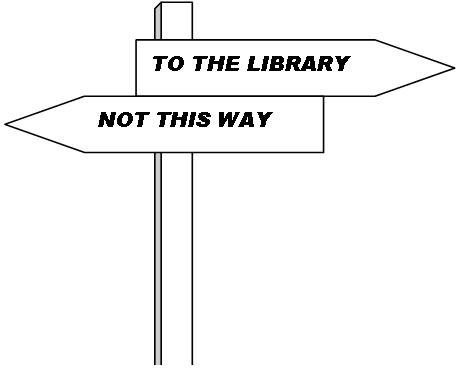
Now which way did she tell me to turn?…   Everything had been so surreal, Gus realized he wasn’t quite sure exactly what Gaia had said. Then his eyes fell upon a sign across the road. It looked like this:
To The Library
“Curiouser and curiouser…” Gus grinned, amused at his literary allusion. Then, addressing himself to no-one in particular, “Well, whaddya say, shall we go to the… library?” Continue reading

SunWinks! July 6, 2014: H.M.S. Metaphor Sails Again

SunWinks! July 6, 2014: The H.M.S. Metaphor Sails Again

Dear SunWinkers!

A tasty confection the metaphor,
As sweet to an ode as a petit four,
A friend to the scribe,
Which, aptly applied,
Your poem will be so much the better for.

Last week, we introduced the idea that our language is built through metaphor. There were so many great stories to choose from, and all from just the one book: Loose Cannons, Red Herrings, and Other Lost Metaphors by Robert Claiborne [New York: W.W. Norton & Co., 1988]. (I have half a dozen others.) So this week, I’m just going to throw out a few more word stories and let you either work on last week’s prompt, or a completely different prompt which I’ve supplied below.

Annie Oakley

Phoebe Anne Oakley Mozee, a.k.a. Annie Oakley, gave shooting exhibitions in Buffalo Bill’s Wild West Show in the late 1800s. One of her most famous tricks was to throw a playing card into the air and shoot a hole in it. In that era, “comps,” complimentary tickets for theater or sporting events, had holes punched in them to prevent them being resold. Ban Johnson, founding president of the American League, took to calling such comps “Annie Oakleys,” and the name stuck. Later on, the nickname came to refer to other freebies, such as a walk in baseball. Alas, the nickname is virtually forgotten today.

Have you ever thought about where the name “cockpit” came from? As you might guess, it’s just what it looks like, a reference to the small sunken pits in which cockfights were held. A metaphorical cockpit is any small space in which intense fighting takes place, hence its application to the pilot’s compartment of a fighter plane. Continue reading

Humor: Our Living Language

Our Living Language

 You may have heard the expression “get a wild hair up your butt.” In current usage, it usually refers to a person who is particularly exercised over some problem. Why on earth, you probably thought to yourself, would a hair up one’s rectum cause maniacal behavior? After all, how aggravating can one little hair be? And while we’re about it, how did it get there?

The illogic of this has caused some modern writers to write “get a wild hare up one’s butt”—presumably because having a wild rodent lodged in one’s anus would indeed cause rather animated behavior. But this, of course, is ridiculous. The largest rodent ever lodged in a human rectum is a small hamster, as reported in the August, 1997, issue of the New England Journal of Medicine by a physician at Cedars-Sinai Hospital.

Bugs BunnyThe reality is quite an interesting story, and illustrates how our language develops over time. The first thing that needs to be said is that “up your butt” is a typical crude accretion added for emphasis in recent times and has nothing to do with the origin of the phrase, which in no way involves a medical condition such as might be presented to a proctologist. Continue reading