Dear SunWinkers!
“The time has come,” the Walrus said,
“To talk of many things:
Of shoes–and ships–and sealing-wax–
Of cabbages–and kings–
And why the sea is boiling hot–
And whether pigs have wings.”
Lewis Carroll
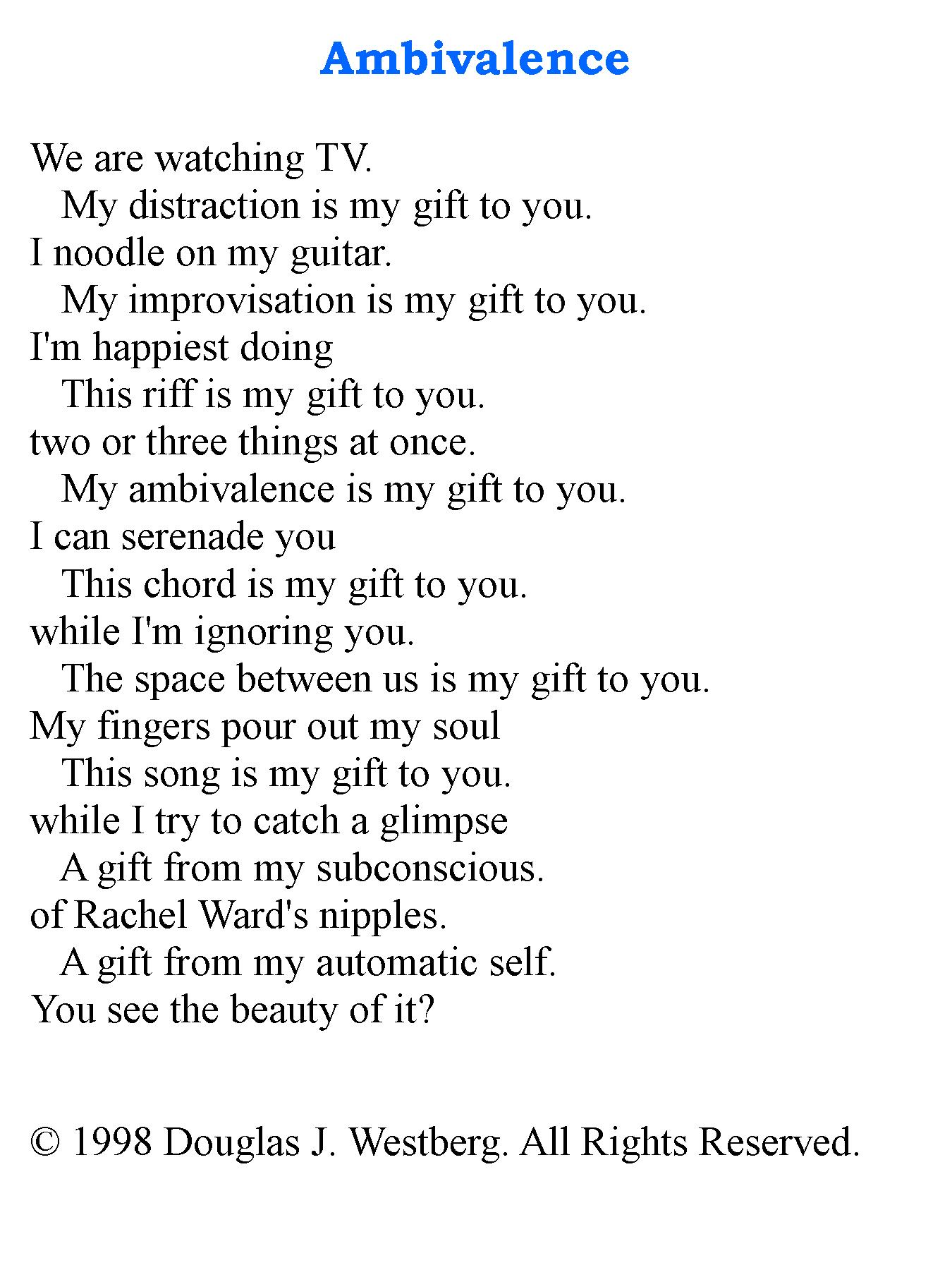
Well, I got Len to write a poem, so pigs must have wings…..
Anyway, poetry is many things, and consists of many things, and we are going to talk about one of them. Today I want you to think about the placement of the words on the page.
Now, poetry is an oral medium. A good poem must be read out loud, both by the poet in the process of composition, and by the discerning reader.
It follows that the organization of a poem affects how it sounds when read out loud. When it is written in a fixed form, such as a ballad, the form is imposed on the content, and the content must be manipulated to fit the structure. Therefore, much of the music of the poem comes from the superimposed formal structure.
The emergence of open form (or free verse) spearheaded by Ezra Pound and William Carlos Williams in the 1940s is based on the idea that the form of a poem ought to grow organically from the thoughts, words, and breathing of the poet. Pound said that poets should “compose in the sequence of the musical phrase, not in the sequence of a metronome.”




 SunWinks!