SunWinks! July 20, 2014: Where Is Thy Sting?

Dear SunWinkers!

Out, out, brief candle!
Life’s but a walking shadow, a poor player
That struts and frets his hour upon the stage
And then is heard no more.

            Shakespeare, Macbeth

 

SunWinksLogoI find myself being rather emotional these days. Last week, I spent four days in bed with the chest flu. This sort of inactivity and helplessness is very problematical for me as a trigger for depression. After another week, I’m still not my better self in terms of energy and industry.

Add to this… Continue reading

Exercise: Twenty Two Words from Eliot

Twenty-Two Words from Eliot


Burnt, I circumambulate my maisonette
in protozoic stupor,
mulling hollow images formulated
from the sawdust
of etherised metaphysics.

Outside the window-panes,
sun-kist hyacinths
dance with the arboreal shadows
falling across my tea and marmalade,
but I conjure only
broad-bottomed sea-girls
in ragged trousers.

Empty, I whimper
like a fugitive.
                             Empty
is the cruellest word.


© 2014 Douglas J. Westberg. All Rights Reserved. Please share, link to, reblog, but do not copy or alter.


The prompt (adapted from The Poet’s Companion [Kim Addonizio and Dorianne Laux; New York: W.W. Norton, 1997]):

Skim several books of poetry by, perhaps, your favorite poets. Without paying too much attention to the context, jot down words that strike your fancy. Go through the resulting list and pick out about twenty of these. Fashion them into a poem, using these words and as few other words as possible.

In this case, I started with a list of twenty words exclusively from T.S. Eliot poems. (I added “burnt” and “tea” as I went along.)

SunWinks! July 13, 2014: The H.M.S. Metaphor Goes On Extended Holiday

SunWinks! July 13, 2014: The H.M.S. Metaphor Goes On Extended Holiday

Dearest SunWinkers!

SunWinksLogoWe’ve been talking about metaphor in our language (that’s how it’s built) and our poetry (it wouldn’t be very poetic without it). Metaphors—and successful poetry—make us look at things in new ways by making fresh connections among diverse ideas.

An extended metaphor is a comparison that is carried out through an extended part or the entire length of a work. Some writers say it is synonymous with allegory. I think they are two different things, but I don’t have the energy to belabor the point here.

Here is a tiny sample of poems which use extended metaphors. Browse your favorite anthology to find many more. They shouldn’t be too hard to pick out. In fact, it occurs to me this would be a fabulous exercise!

Continue reading

Excerpt: You Can Talk!

You Can Talk!

from The Golden Books
Copyright © 2012 Douglas J. Westberg. All Rights Reserved. International Copyright Secured.

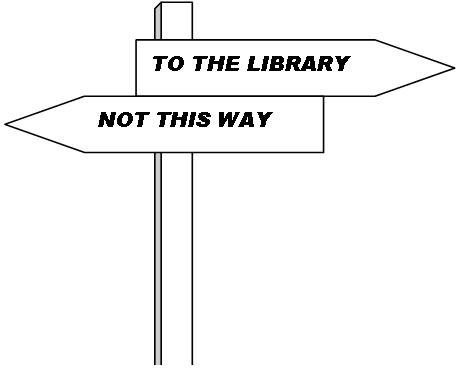
Now which way did she tell me to turn?…   Everything had been so surreal, Gus realized he wasn’t quite sure exactly what Gaia had said. Then his eyes fell upon a sign across the road. It looked like this:
To The Library
“Curiouser and curiouser…” Gus grinned, amused at his literary allusion. Then, addressing himself to no-one in particular, “Well, whaddya say, shall we go to the… library?” Continue reading

Humor: Our Living Language

Our Living Language

 You may have heard the expression “get a wild hair up your butt.” In current usage, it usually refers to a person who is particularly exercised over some problem. Why on earth, you probably thought to yourself, would a hair up one’s rectum cause maniacal behavior? After all, how aggravating can one little hair be? And while we’re about it, how did it get there?

The illogic of this has caused some modern writers to write “get a wild hare up one’s butt”—presumably because having a wild rodent lodged in one’s anus would indeed cause rather animated behavior. But this, of course, is ridiculous. The largest rodent ever lodged in a human rectum is a small hamster, as reported in the August, 1997, issue of the New England Journal of Medicine by a physician at Cedars-Sinai Hospital.

Bugs BunnyThe reality is quite an interesting story, and illustrates how our language develops over time. The first thing that needs to be said is that “up your butt” is a typical crude accretion added for emphasis in recent times and has nothing to do with the origin of the phrase, which in no way involves a medical condition such as might be presented to a proctologist. Continue reading

SunWinks! June 22, 2014: Go Take A Haiku, Part Deux

Go Take A Haiku, Part Deux

Dear SunWinkers!

We’ve been talking about haiku, that ancient Japanese party game. Instead of gathering together to play Twister or Grand Theft Auto, 12th century Japanese poets would get together and write renga, collaborative poems of verses in syllables 5-7-5, 7-7, 5-7-5, 7-7, etc., going around the room, each person contributing another verse, ultimately running to hundreds, even thousands of verses. It was quite an honor to be chosen to contribute the starting verse, called the hokku.Poets would come to renga parties prepared with dozens of hokku, and would inevitably go home with lots of leftover hokku. So they would publish books of hokku, and hokku became an art form unto itself.

About the 16th century, various art forms became the province of the hoi polloi rather than just the royalty; these included Kabuki theatre, woodblock prints, and hokku. The popular hokku degenerated into something very much the equivalent of the bawdy limerick. They called these haikai, which means “unusual fun.” Basho (1644-1694) is credited with raising the art of the hokku/haikai once again to something more sublime. What’s easy to overlook is that Basho and others did not always have their heads in the clouds. They were not above writing personal, droll epigrams and even getting scatological. Continue reading

Story: The Honey Badger

The Honey Badger

from The Golden Books
Copyright © 2012 Douglas J. Westberg. All Rights Reserved. International Copyright Secured.

Then Gus noticed something right behind Tucker. “Don’t move!” he whispered

Tucker heard the maraca sound. “It’s a rattlesnake, isn’t it?”

“Oh my God, Tucker, what do we do? I’ll get a stick.”

“Don’t you move either. Either one of us moves, I’m dead.”

“Okay.”

A minute went by. Then two. It seems like hours. Then Gus noticed Tucker had moved imperceptibly. “You’re moving,” he whispered.

“Shh.” Tucker was moving so slowly, Gus couldn’t even see him moving. It was like watching grass grow. He could only tell Tucker was moving when he realized he was in a different position from a minute before. Slowly, infinitesimally, Tucker was turning to face the snake. Gus had never seen anything like it.

Then Tucker made his fatal mistake. His tail twitched. That was enough. The rattlesnake struck.

Kree-k-k-k-kree! Continue reading