SunWinks! September 28, 2014: Nothing Is Sacred

 I think that I shall never see
A poem as trivial as “Trees.”…

SunWinksLogoDear SunWinkers!

Joyce Kilmer’s 1913 poem “Trees” is an easy and favorite target for parody. I was shocked to learn that “Trees” was originally published in the prestigious Poetry magazine. (I was also shocked to learn that Joyce Kilmer is a guy.) And you know, looking at it again, it’s not the worst poem ever, especially for 1913.

Joyce Kilmer

Writing parody can be lots of fun, and it can improve your technique and even give you a new appreciation for the poem you are lampooning.

This week, I wrote a parody of James Whitcomb Riley’s “When the Frost Is On the Punkin,” a poem I grew up with. It (the original) is a celebration of crisp autumn mornings on the farm. I heard some baseball commentator say, “The pitcher’s on the rubber, and the batter’s in the box…” and said to myself, “OMG I have to write that!”

“When The Pitcher’s On the Rubber”

Continue reading

Caption Contest II

The Caption Contest Returns Again once more for the second time! I’ve included my own captions, unlike when we did this on Gather, but please contribute your captions for any or all of these as well. Just put them in a comment with the photo number(s).

1.

The Tower of Babble

2.


To blazz or not to blazz, that is the quezztion...

To blazz or not to blazz, that is the quezztion…

3.

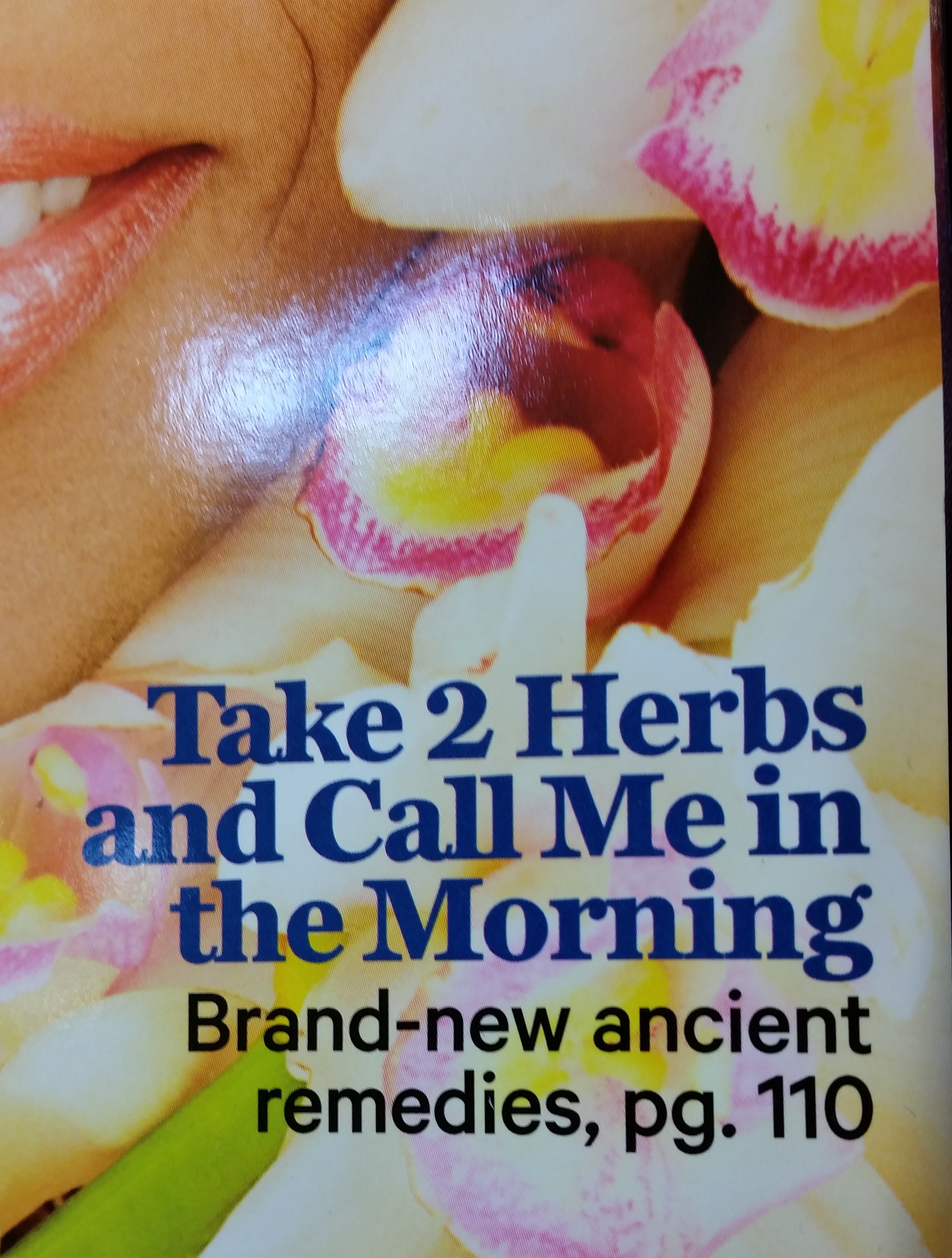
Grandma always said: the best ancient remedies are the brand new ones...

Grandma always said: the best ancient remedies are the brand new ones…

SunWinks! September 21, 2014: Playing the Field

Dear SunWinkers!SunWinksLogo

“The time has come,” the Walrus said,
“To talk of many things:
Of shoes–and ships–and sealing-wax–
Of cabbages–and kings–
And why the sea is boiling hot–
And whether pigs have wings.”
Lewis Carroll


Well, I got Len to write a poem, so pigs must have wings…..

Anyway, poetry is many things, and consists of many things, and we are going to talk about one of them. Today I want you to think about the placement of the words on the page.

Now, poetry is an oral medium. A good poem must be read out loud, both by the poet in the process of composition, and by the discerning reader.

It follows that the organization of a poem affects how it sounds when read out loud. When it is written in a fixed form, such as a ballad, the form is imposed on the content, and the content must be manipulated to fit the structure. Therefore, much of the music of the poem comes from the superimposed formal structure.

The emergence of open form (or free verse) spearheaded by Ezra Pound and William Carlos Williams in the 1940s is based on the idea that the form of a poem ought to grow organically from the thoughts, words, and breathing of the poet. Pound said that poets should “compose in the sequence of the musical phrase, not in the sequence of a metronome.”

Continue reading

SunWinks! September 14, 2014: Gently Down the Stream

Dear SunWinkers:SunWinksLogo

Years ago, I was struggling with deep depression, divorce, custody battle, blah blah blah. I started writing poetry as a form of therapy. I would usually begin by doing some automatic writing in my journal, just writing the next word that came into my head without thinking about it, and before you know it, there I would be, writing a poem.

Not too long ago, I wrote an experimental poem, just a goof, really, called “Listening In.” The idea was to “record” (not literally, the poem was a deliberate composition) what I heard and saw and what was going through my mind as I watched a Chicago White Sox broadcast with Ken “Hawk” Harrelson and Steve Stone. The poem leaps from inner thought to external action to thought to action to thought to action.

So, in a way, this is what is called stream of consciousness writing. Stream-of-consciousness writing differs from automatic writing in that the author composes the stream of thought that is putatively going through the character’s head. S-o-c writing eschews punctuation and sentence structure, hurtling along from thought to fragmentary thought. James Joyce, Virginia Woolf, William Faulkner, and Jack Kerouac are notable practitioners. Continue reading

SunWinks! September 7, 2014: Give ‘Em The Fast Shuffle

Dear SunWinkers:

SunWinksLogo How’s the wife, you ask? Get it from the horse’s mouth at http://carollineswords.wordpress.com ! We went to Carol’s hairdresser today and—well, I’ll let her tell you.

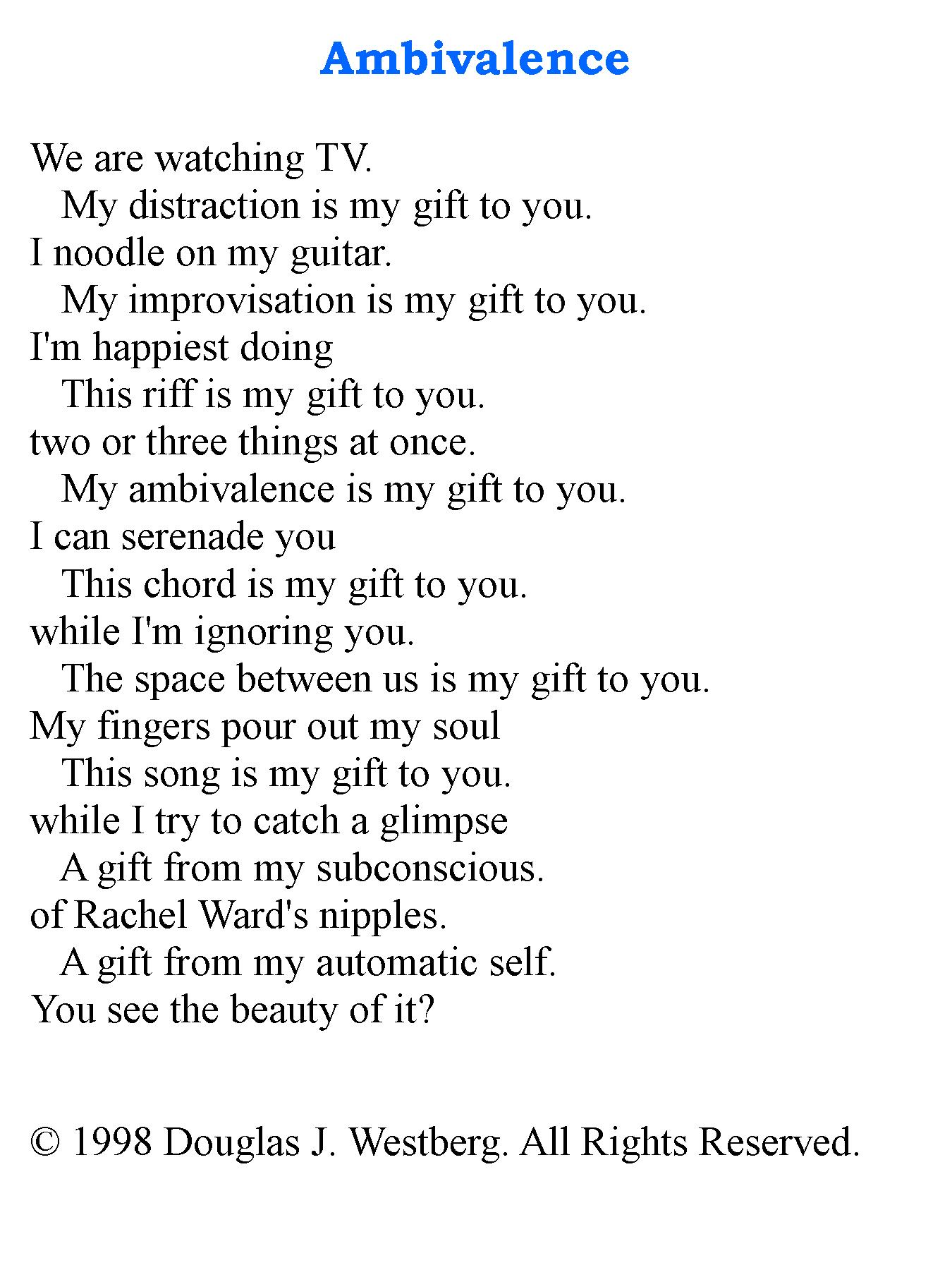
Interesting story: My good friend and colleague Susan Budig, who writes a column called Mindful Poetry, did a prompt asking for readers’ original forms. Respondents were instructed to submit at least two examples of poems in that form. I submitted the two you see below. Susan’s response was that she didn’t see how the two poems were the same form.

Poem: Ambivalence Continue reading

SunWinks! August 31, 2014: Cubism Isn’t Just For Squares

SunWinksLogoDear SunWinkers:

Cubism is an artistic movement of the 1910’s and ‘20s exemplified by Picasso. The idea of cubism is to deconstruct the objective components of a subject and reassemble them in striking ways. So Picasso pulls out eyes and nose and breasts and contours and assembles them on the canvas as though he had turned around and thrown them over his shoulder like a bridal bouquet. The effect is to open the mind and force us to look at the inner structure of things without being seduced by phenomena like symmetry and photorealism.

So it is with cubist poetry, which breaks its subject matter down into discrete pieces and juxtaposes them in unusual ways, creating a nonlinear effect on the mind that would otherwise be inaccessible underneath layers of the familiar flow of meaning and language. Continue reading

SunWinks! August 24, 2014: Keeping It Short

SunWinksLogoDear SunWinkers!

William Stafford got up at four in the morning and wrote a poem every day. Robert Bly admired this and spent a year writing a poem a day, which he subsequently published as Morning Poems.

 I’m just guessing here, but I don’t think you can write “The Waste Land” or “The Rime of the Ancient Mariner” every day. I was writing almost a poem a day a couple months ago, not in response to a challenge, just feeling fecund. Most are a page to a page-and-a-half long.

You get a feel for a certain length. The beginning is about half a page. The development is about half a page. And the ending is about half a page. You write the beginning, and after about 6-10 lines, it’s time to start thinking about getting into the development. It’s very much like the difference between sitting down to write a minuet or a sonata. Continue reading

Caption Contest

The Caption Contest Returns! I’ve included my own captions, unlike when we did this on Gather, but please contribute your captions for one or more of these as well. Just put them in a comment with the photo number(s).

1.

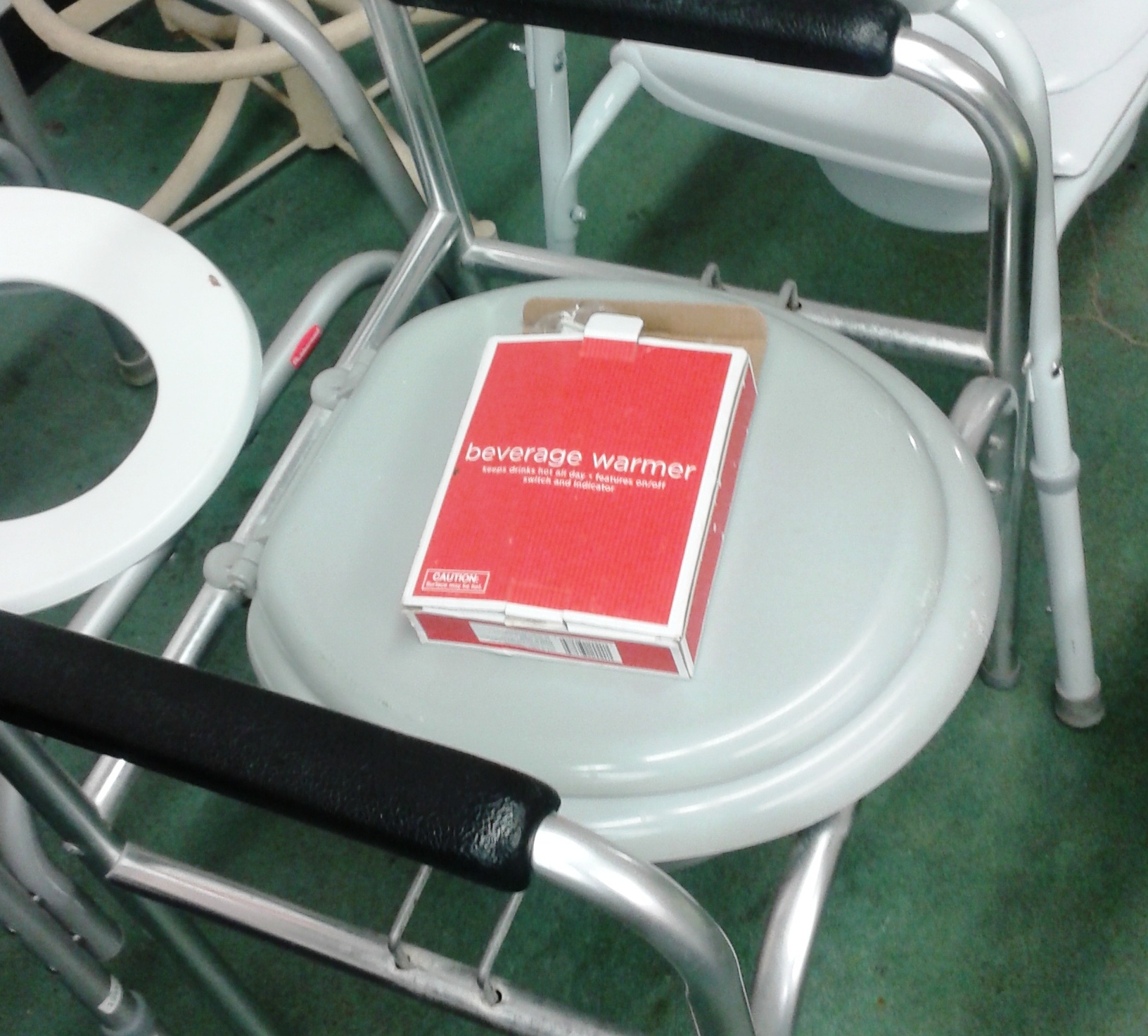
Beverage Warmer

There must be a better way…

2.

LOST: Comma. August 20, 2014 in front of Compass Oncology. Answers to "Muffy."

LOST: Comma. August 20, 2014 in front of Compass Oncology. Answers to “Muffy.”

3.

Your Speed: 10 MPH

Riding by on my bicycle…

Sunwinks! August 17, 2014: Listing to Port

SunWinksLogoDear SunWinkers!

I would sure love to see some of you so-called non-poets, especially my fellow editors, take a crack at a list poem before we leave the topic. If you can make out a grocery list, you can write a list poem. It’s fun! You’ll be the envy of your friends! You can add “Poet” to your business card!

Review the examples in last week’s column. You can see the possibilities are endless, and there’s no way to “get it wrong.” Bottom line: if you say it’s a poem, it’s a poem. If there’s a list involved, it’s a list poem!

  • The list doesn’t have to be the whole poem
  • The list items don’t have to be single words
  • The list items don’t have to be all in the same form
  • And if that weren’t enough,
  • The list items can be interrupted with parenthetical phrases

So I expect to see lots of list poems next week. There’s just no excuse!

Continue reading