SunWinks! September 14, 2014: Gently Down the Stream

Dear SunWinkers:SunWinksLogo

Years ago, I was struggling with deep depression, divorce, custody battle, blah blah blah. I started writing poetry as a form of therapy. I would usually begin by doing some automatic writing in my journal, just writing the next word that came into my head without thinking about it, and before you know it, there I would be, writing a poem.

Not too long ago, I wrote an experimental poem, just a goof, really, called “Listening In.” The idea was to “record” (not literally, the poem was a deliberate composition) what I heard and saw and what was going through my mind as I watched a Chicago White Sox broadcast with Ken “Hawk” Harrelson and Steve Stone. The poem leaps from inner thought to external action to thought to action to thought to action.

So, in a way, this is what is called stream of consciousness writing. Stream-of-consciousness writing differs from automatic writing in that the author composes the stream of thought that is putatively going through the character’s head. S-o-c writing eschews punctuation and sentence structure, hurtling along from thought to fragmentary thought. James Joyce, Virginia Woolf, William Faulkner, and Jack Kerouac are notable practitioners. Continue reading

SunWinks! September 7, 2014: Give ‘Em The Fast Shuffle

Dear SunWinkers:

SunWinksLogo How’s the wife, you ask? Get it from the horse’s mouth at http://carollineswords.wordpress.com ! We went to Carol’s hairdresser today and—well, I’ll let her tell you.

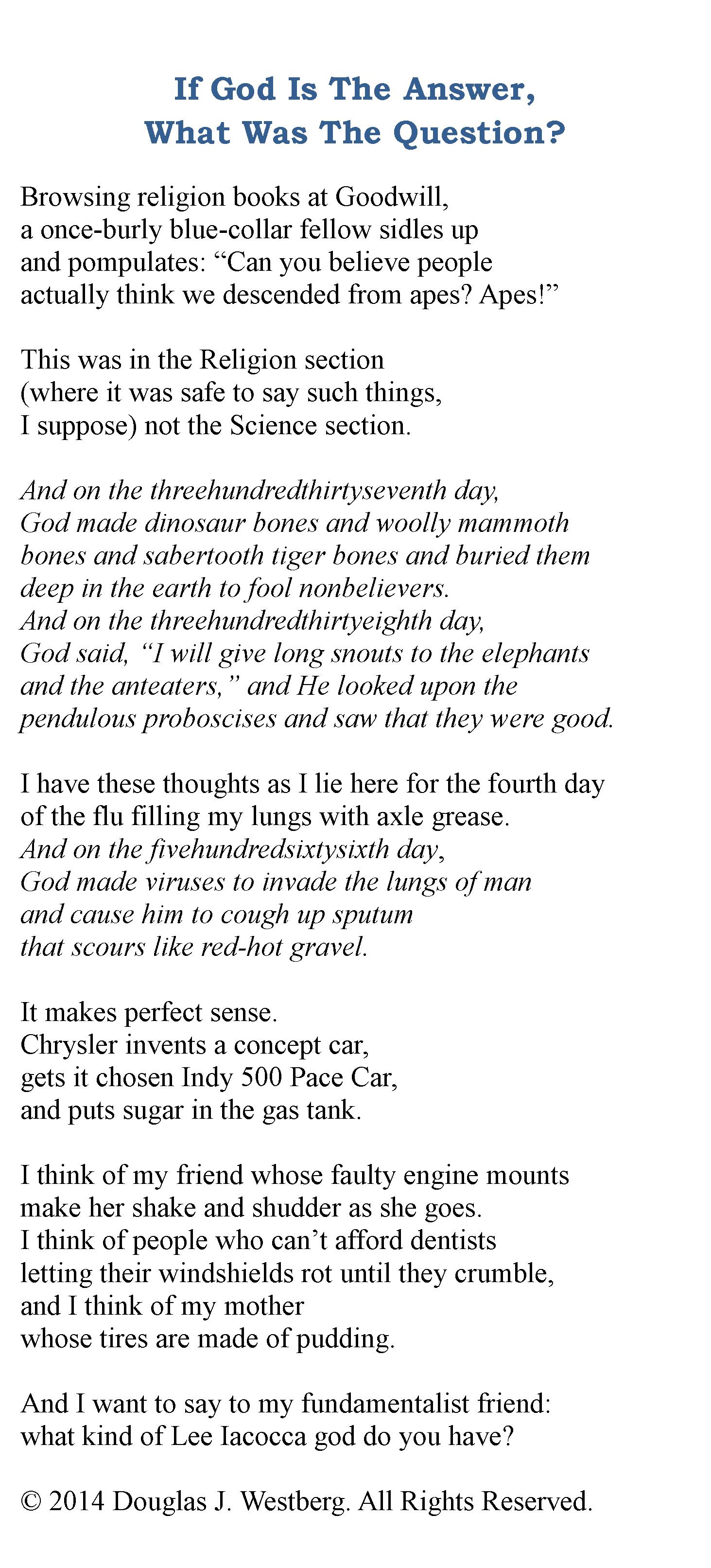
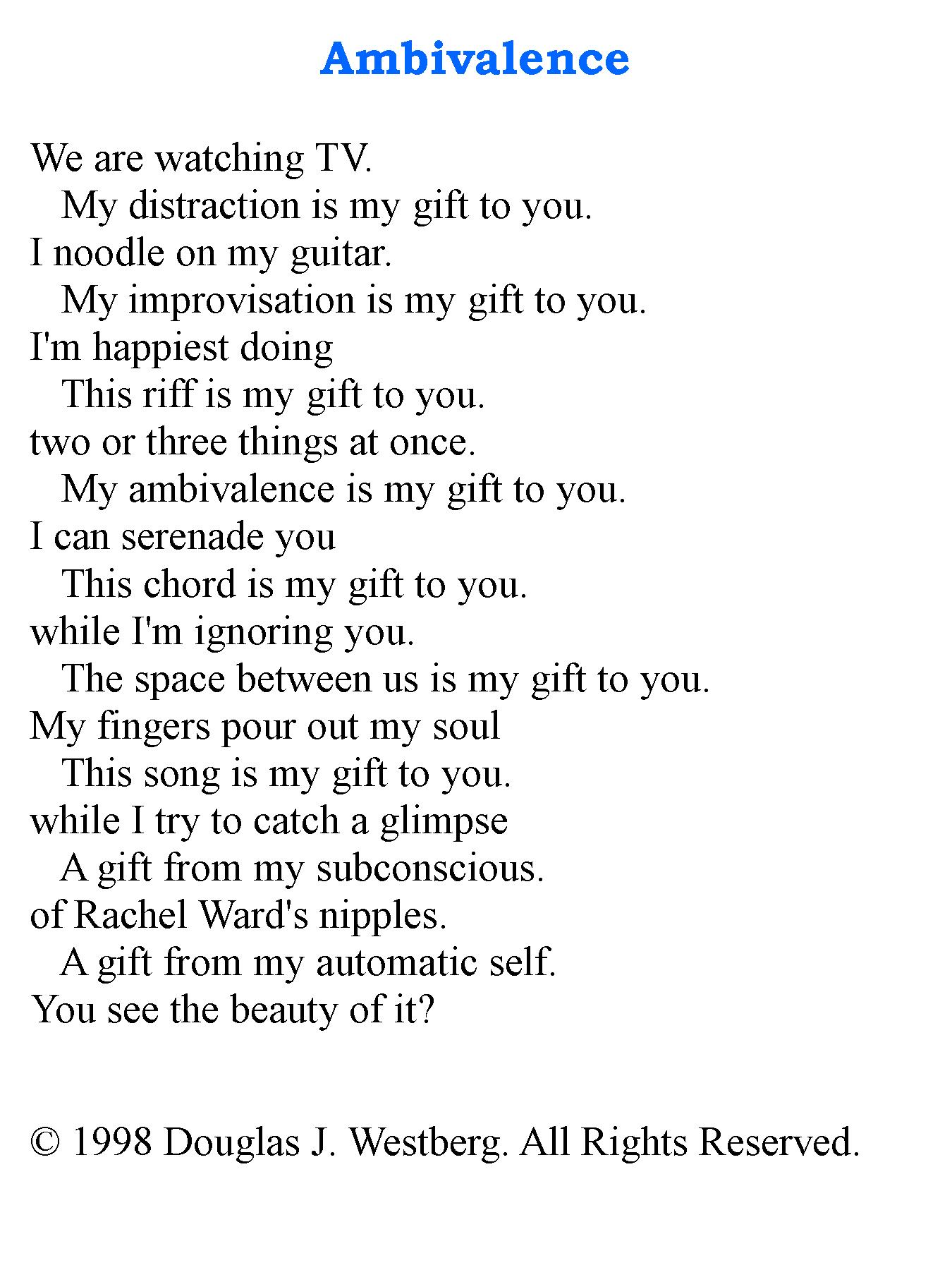
Interesting story: My good friend and colleague Susan Budig, who writes a column called Mindful Poetry, did a prompt asking for readers’ original forms. Respondents were instructed to submit at least two examples of poems in that form. I submitted the two you see below. Susan’s response was that she didn’t see how the two poems were the same form.

Poem: Ambivalence Continue reading

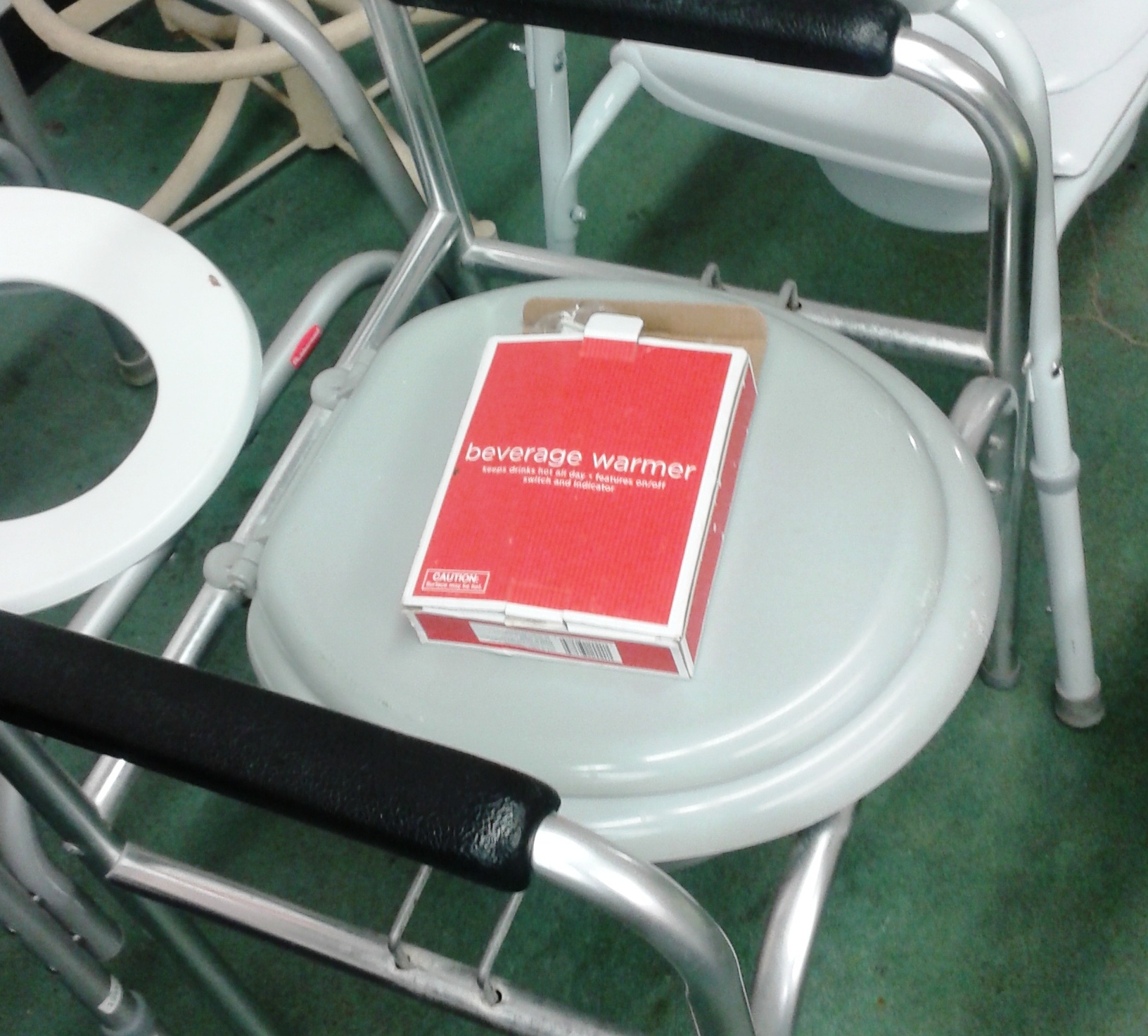
Caption Contest

The Caption Contest Returns! I’ve included my own captions, unlike when we did this on Gather, but please contribute your captions for one or more of these as well. Just put them in a comment with the photo number(s).

1.

Beverage Warmer

There must be a better way…

2.

LOST: Comma. August 20, 2014 in front of Compass Oncology. Answers to "Muffy."

LOST: Comma. August 20, 2014 in front of Compass Oncology. Answers to “Muffy.”

3.

Your Speed: 10 MPH

Riding by on my bicycle…

Sunwinks! August 17, 2014: Listing to Port

SunWinksLogoDear SunWinkers!

I would sure love to see some of you so-called non-poets, especially my fellow editors, take a crack at a list poem before we leave the topic. If you can make out a grocery list, you can write a list poem. It’s fun! You’ll be the envy of your friends! You can add “Poet” to your business card!

Review the examples in last week’s column. You can see the possibilities are endless, and there’s no way to “get it wrong.” Bottom line: if you say it’s a poem, it’s a poem. If there’s a list involved, it’s a list poem!

  • The list doesn’t have to be the whole poem
  • The list items don’t have to be single words
  • The list items don’t have to be all in the same form
  • And if that weren’t enough,
  • The list items can be interrupted with parenthetical phrases

So I expect to see lots of list poems next week. There’s just no excuse!

Continue reading

New Story: Shear Coincidence

Shear Coincidence


A Zen monk was bicycling through a residential neighborhood in East Vancouver, Washington. He was pedaling along a random side street, miles from home, as a consequence of meandering around checking out garage sales, when by chance he came upon a man pinned underneath his lawn tractor beside the curb in front of his home. The monk took in the scene and asked himself, “Is this really happening?” He raced up to the man and set his bicycle down.

“Are you all right?” he asked the man, a typically but not grossly overweight Caucasian man in his fifties or sixties, evidently the homeowner. The tractor was on its side, half off the curb; the man was lying on his side with his legs underneath the steering wheel. He was struggling with the tractor, but in his position, could not budge the tractor or slide out from under the steering column.

John Deere lawn tractor“I just need to lift this off me,” he replied. The monk lifted the tractor by the steering wheel and with some effort wrested it off the man’s legs.

“Are you okay?” the monk asked again, concerned the man’s legs might have gotten crushed or something.

“Yes, I’m fine,” the man said, “can you help me up?” The man extended his hand and the monk helped him to his feet. It took somewhat more effort than lifting the tractor, actually, but between the two of them, they managed it. “Thank you very much,” said the man. Continue reading

Recent Photos

Here are several recent photos, nothing terribly artful… two from today’s yardwork and two from our overnight to Depoe Bay.

cloverCoquettish bush-clovers
Stretched out on the ground,
Ill-mannered just as much
As they are beautiful
– Basho

20140728_123600Jason Voorhees mows the lawn! (I’m allergic to grass.)

CarolCarol at McMenamins in Lincoln City

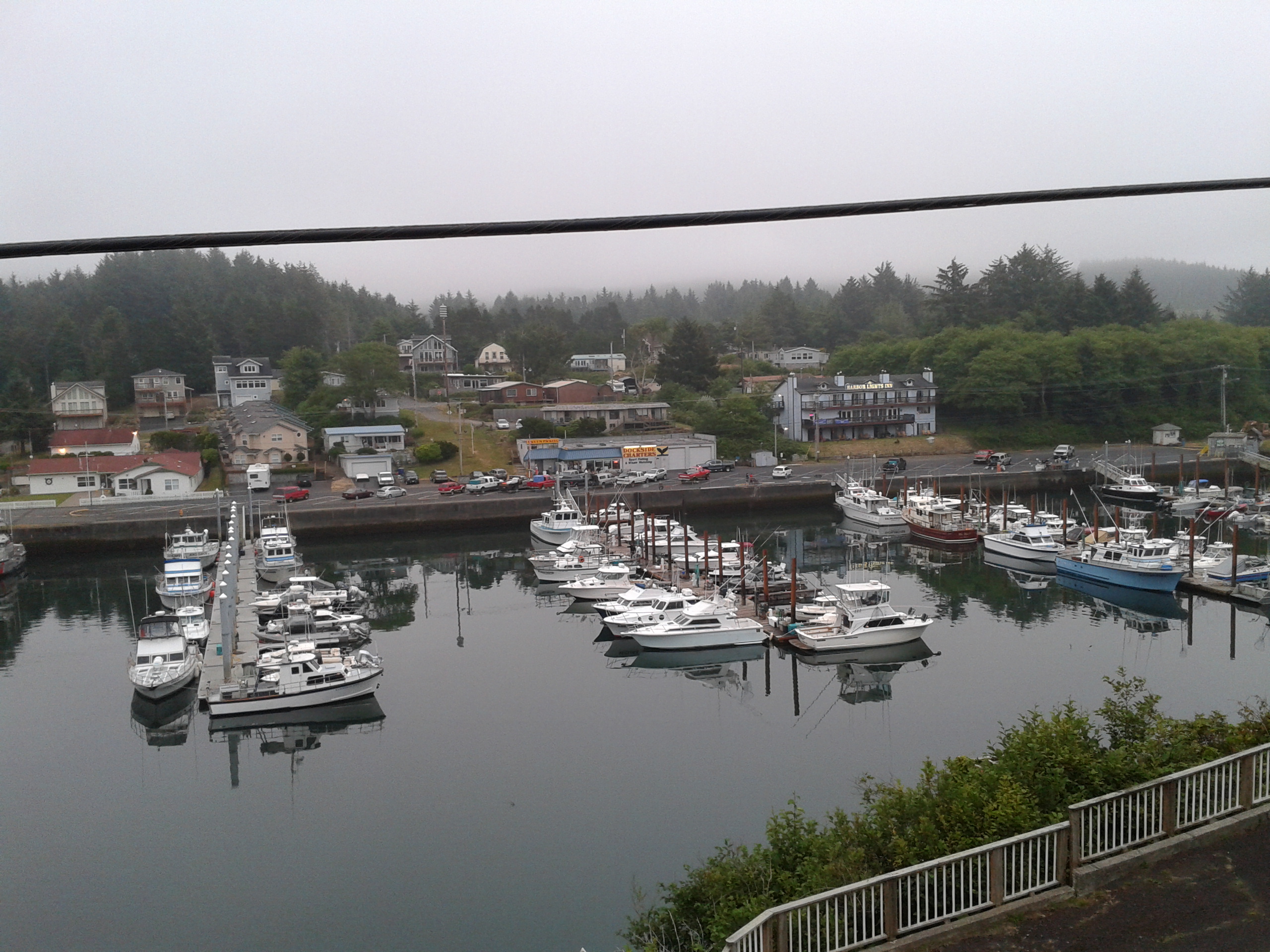
Wharf at Depoe BayThe wharf at Depoe Bay


SunWinks! July 6, 2014: H.M.S. Metaphor Sails Again

SunWinks! July 6, 2014: The H.M.S. Metaphor Sails Again

Dear SunWinkers!

A tasty confection the metaphor,
As sweet to an ode as a petit four,
A friend to the scribe,
Which, aptly applied,
Your poem will be so much the better for.

Last week, we introduced the idea that our language is built through metaphor. There were so many great stories to choose from, and all from just the one book: Loose Cannons, Red Herrings, and Other Lost Metaphors by Robert Claiborne [New York: W.W. Norton & Co., 1988]. (I have half a dozen others.) So this week, I’m just going to throw out a few more word stories and let you either work on last week’s prompt, or a completely different prompt which I’ve supplied below.

Annie Oakley

Phoebe Anne Oakley Mozee, a.k.a. Annie Oakley, gave shooting exhibitions in Buffalo Bill’s Wild West Show in the late 1800s. One of her most famous tricks was to throw a playing card into the air and shoot a hole in it. In that era, “comps,” complimentary tickets for theater or sporting events, had holes punched in them to prevent them being resold. Ban Johnson, founding president of the American League, took to calling such comps “Annie Oakleys,” and the name stuck. Later on, the nickname came to refer to other freebies, such as a walk in baseball. Alas, the nickname is virtually forgotten today.

Have you ever thought about where the name “cockpit” came from? As you might guess, it’s just what it looks like, a reference to the small sunken pits in which cockfights were held. A metaphorical cockpit is any small space in which intense fighting takes place, hence its application to the pilot’s compartment of a fighter plane. Continue reading